Interview with Sarah Baker (Cheltenham Food Bank)
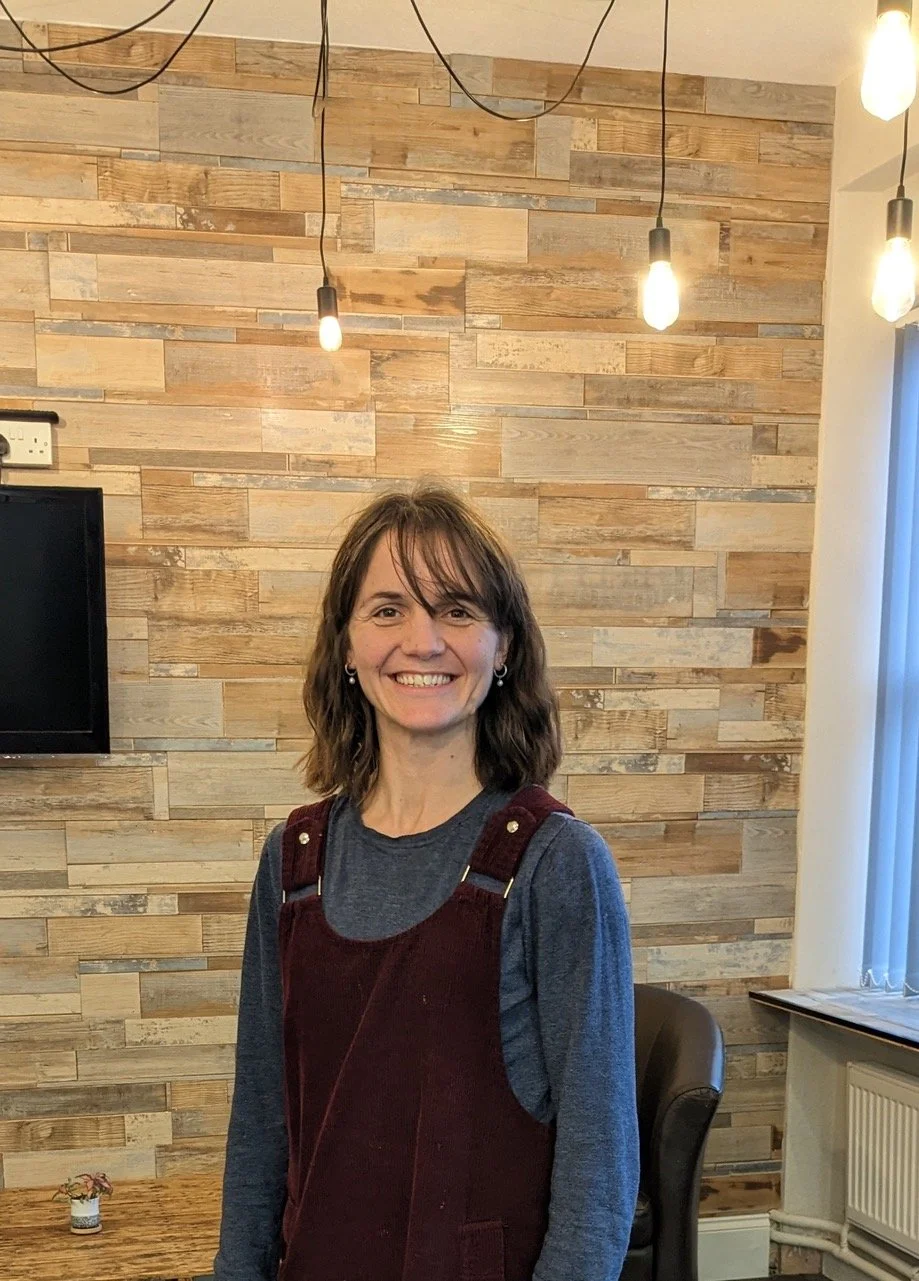
Sarah Baker has been Operations Manager at Cheltenham Food Bank for the last three years. She spoke to Cheltenham Welcomes Refugees about the food bank’s work, and how they have been collaborating with CWR to tackle food insecurity amongst refugees and people seeking asylum. The interview was conducted on 16th September 2025.
Sarah, tell us about your experience of running Cheltenham Food Bank.
I love it because it’s really practical. And its joy is that you connect with lots and lots of different groups. It’s not just you doing your thing by yourself: there’s a real sense that we have to do this together. The food is great, but it’s very short term, so it has to be joined up with other organisations to make sure that people are really getting support, and are able to move forward from the situations they find themselves in.
You’re a board member on the new Cheltenham Food Board, as part of the Good Food Cheltenham network. What’s the aim of this network?
The aim of the Food Board is to join everything up, because there are so many different aspects of food. We’ve talked about it as like a ladder: at the bottom you’ve got people who are struggling to get food, and then you’ve got businesses that have lots of surplus or they want to support and invest in their communities. So they want to know what’s going on.
How has this year been for the food bank?
The level of demand has stayed the same over the last couple of years, after a big increase just over two years ago with the cost of living crisis. But everyone’s feeling the pinch a bit more, so the challenge is having enough donations. All charity sectors know that there’s not a lot of funding around. So the need is there, but the support isn’t necessarily there. Need is also becoming more complex for people: some of the levels of poverty are becoming more entrenched as people just get stuck, because there isn’t an easy way out.
What does that more complex need look like?
We’re seeing more and more people who have quite serious problems with debt, especially when debt is impacting things like utility bills or rent. There are quite heavy risks attached to that, and the number of people who come in with that has definitely increased. We have Citizens Advice workers on site to provide wrap-around support, because we know that if people are really struggling, then it doesn’t help to just say “go and speak to these people some other time”. It has to be joined up, with real wrap-around support. So we’ve had them on site for three years now and that’s made a real difference in being able to change people’s situations and work through problems, such as through income maximisation.
In what ways are Cheltenham Food Bank and Cheltenham Welcomes Refugees collaborating?
We’ve had links both with CWR and with GARAS for a few years now, working together to support people who need food. It’s difficult because we can’t be the source of food for everyone, so we’ve tried to work really specifically together: if there’s someone with a specific need, then we’re able to support them. For example, if it gets to the end of the month, and they’ve been alright for a few weeks, but the final week is much harder.
It’s important to keep the dialogue between organisations open so that we trust that when someone comes to us, we’re not just their weekly food shop, but that it is really needed. And likewise, CWR & GARAS can trust that if they send us someone, we’ll be able to support them, and we won’t ask lots of questions. So that relationship’s really important.
It’s also about understanding each individual’s situation. People’s situations can be so different, so you can’t have a one-size-fits-all rule. For example, there are some people who gain refugee status and now have access to the benefits system and are seeking work, but may still need support because the processes are so long and they’ve got lots of children, or are unable to work because of complex health needs. So we work with CWR and GARAS to know how people’s situations are developing, and to make sure people are being supported and not just left to get on with it.
An issue with the limited asylum support payments is that it can be difficult to afford food that’s culturally appropriate, which can be more difficult to find or more expensive. Is that something you try to address?
Yes, we make sure that we’re able to meet dietary and cultural requirements, and often do parcels that are halal, vegetarian etc. And if they want, for example, lots of rice rather than a bag of pasta, then we’ll do that. So we make sure that it’s food that they actually know and will be able to use.
For a year and a half we also worked with CWR and Elim Church to run a monthly cook-in for those who were staying in the hotels, as an opportunity to cook their own food. They’d come up with a menu they wanted, and then we’d get the food, and then they would cook it for themselves and for others as well. The hotels provide food, but if the message is always “you’ll get what you’re given”, then there’s not a lot of dignity in that, so being able to cook something of your own is a massive thing. That was an amazing thing to be part of, and I think we all learnt a lot in having that community with the guys who were around then.
Any final thoughts?
It’s really lovely working across organisations because even when we have slightly different slants, it all joins up. We often find that one of the biggest things is just caring and giving people a bit of time, whatever background people have come from. That makes a huge difference.
Click here to support the fantastic work of the Foodbank: https://cheltenham.foodbank.org.uk/give-help/donate-money/